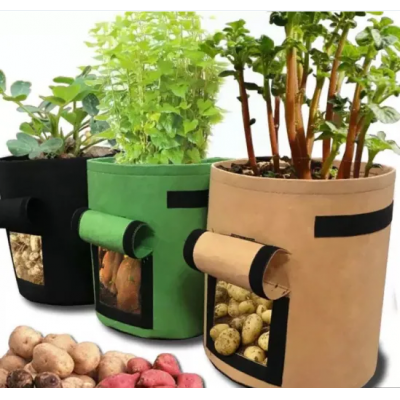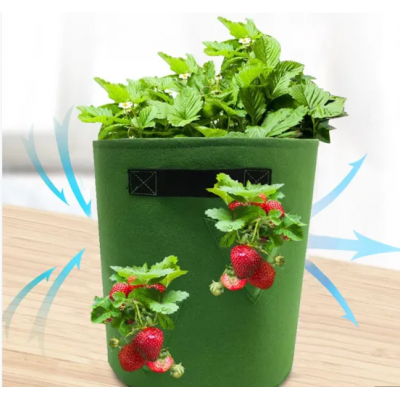
Here's the thing nobody tells you about grow bags: the price tag is the least important number. What matters is whether the handles hold when you lift a fully watered bag, whether the seams split at harvest time, and whether the bag survives more than one season. Our thickened felt grow bags come with reinforced handles, 260–320g/m² fabric, double-needle stitching, and air-pruning wall design. Five-year outdoor life. Round or square. Any colour. ISO 9001 and SGS certified. Factory direct.
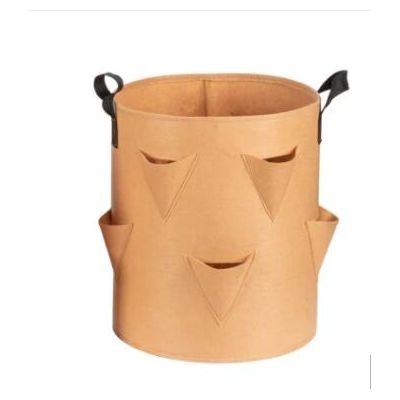
A grow bag with handles is a simple concept: a fabric container with loops sewn into the sides so you can lift, move, and harvest without wrestling with a floppy sack of soil. The problem is, most handles on the market are an afterthought—tacked on with single stitching, positioned wrong, or made from the same lightweight fabric as the bag itself. That's not how we build them. Our handles are sewn directly into the double-needle side seams, reinforced at every stress point, and sized for a confident grip even with wet soil and mature potato plants. The bag itself is 260–320g/m² thickened felt non-woven, air-pruning wall design, biodegradable, and built for five seasons of outdoor use. We've been making these for 15 years—for potato farmers in Idaho, community gardens in the UK, and home growers across Australia. Here's what we've learned.
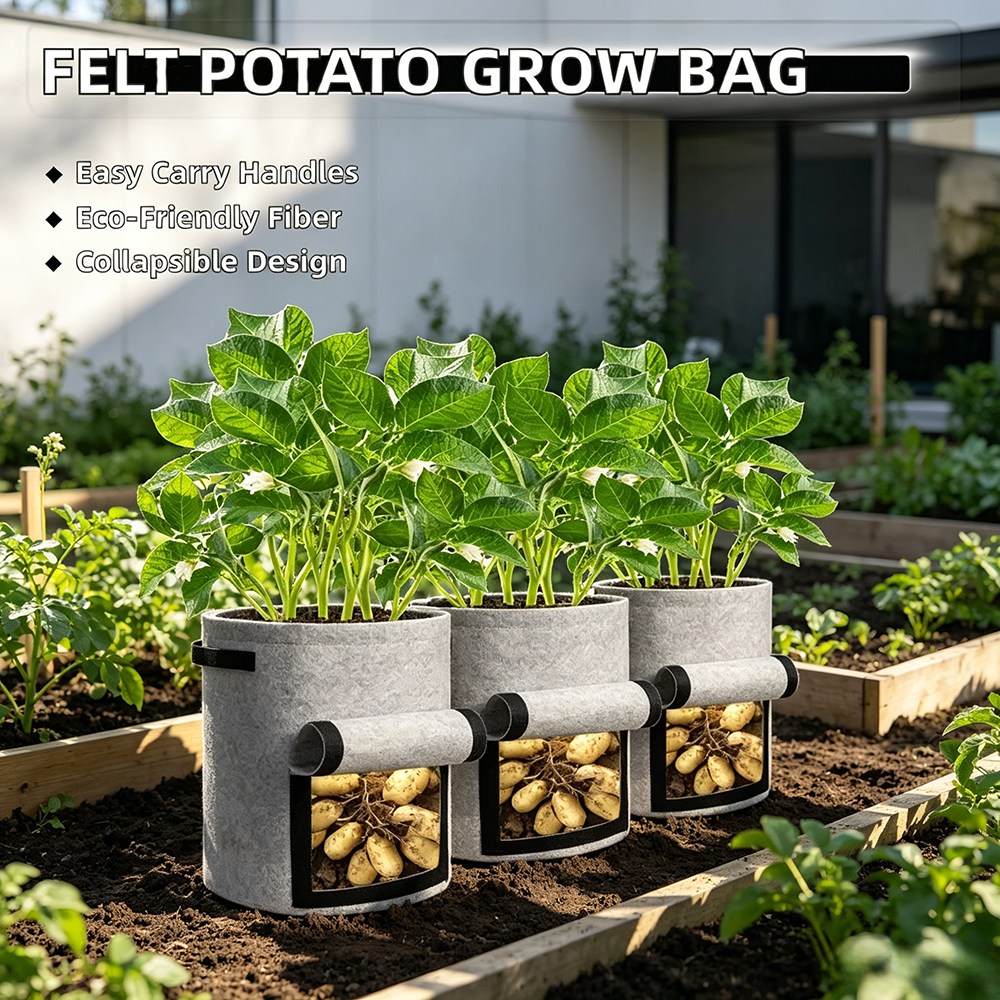
1. Reinforced Handles – Because Harvest Shouldn't Be a Wrestling Match
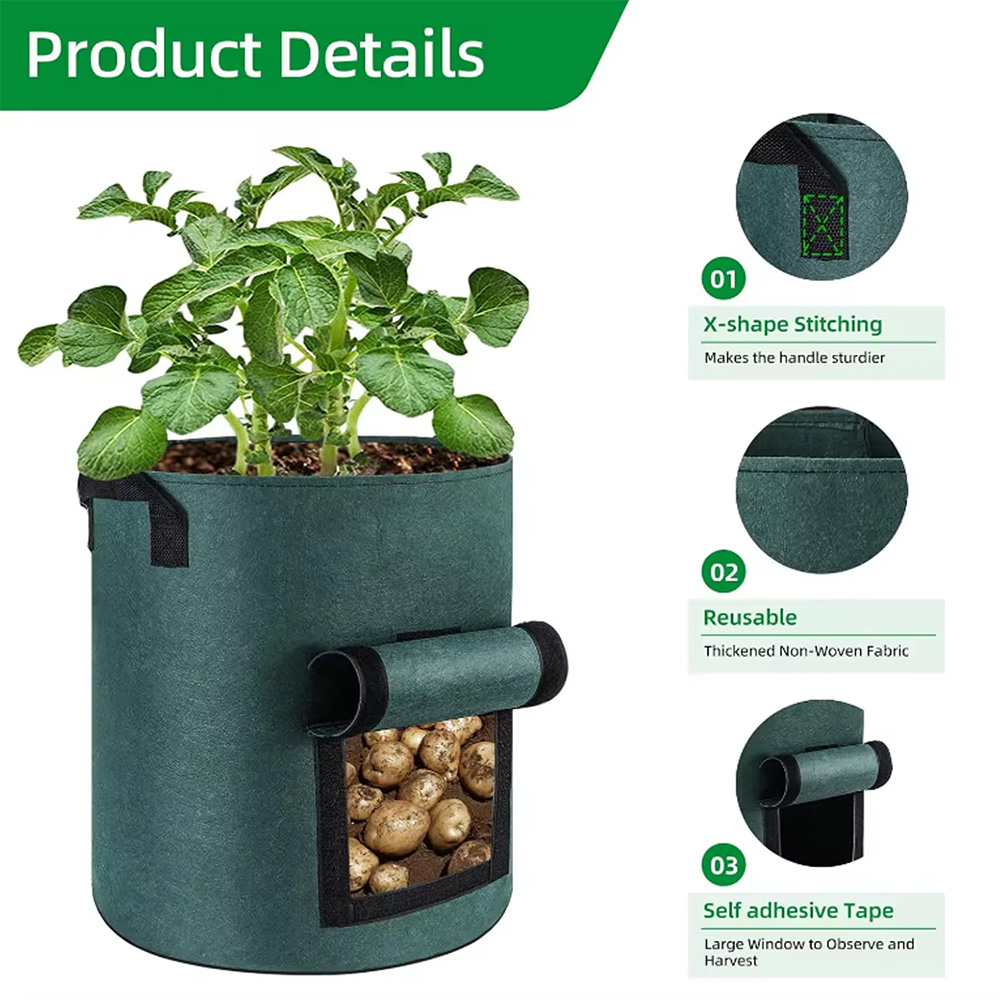
What it is: Fabric handles sewn directly into the double-needle side seams during the stitching process—not tacked on as an afterthought.
What it means in practice: Trust me on this one—handles that aren't integrated into the seam fail. We've had customers send us photos of handles that ripped clean off cheap bags on the first lift, dumping soil and plants everywhere. Our handles are part of the bag's structure, not an add-on.
Why this standard matters: A handle failure at harvest time isn't just an inconvenience—it loses you crop and soil. The extra stitching is insurance.
2. 260–320g/m² Thickened Fabric – The Weight That Lasts
What it is: Four density grades from 260g to 320g per square metre—significantly heavier than the industry-average 150g bags.
What it means in practice: Here's the thing: most budget grow bags sit around 150g/m². They feel thin because they are thin. Our 260g base is where commercial durability starts. The 320g grade handles heavy root crops like potatoes and carrots season after season.
Why this standard matters: The fabric weight determines whether you're buying a one-season disposable or a multi-season investment. The extra grams are worth every cent.
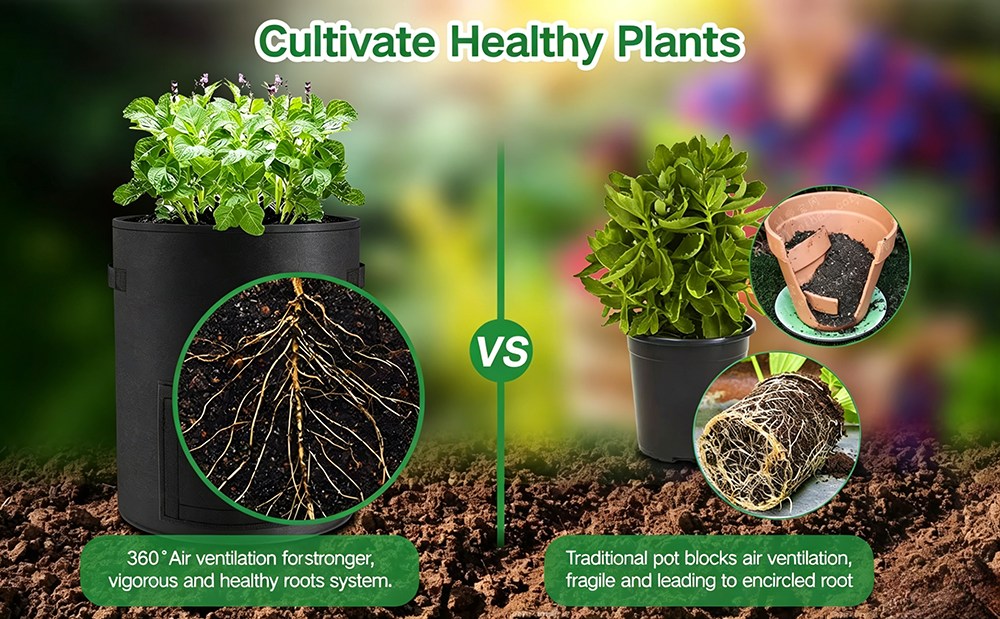
3. Air-Pruning Wall Design – Healthier Roots, Heavier Harvests
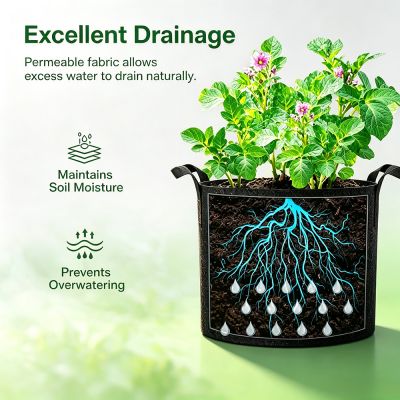
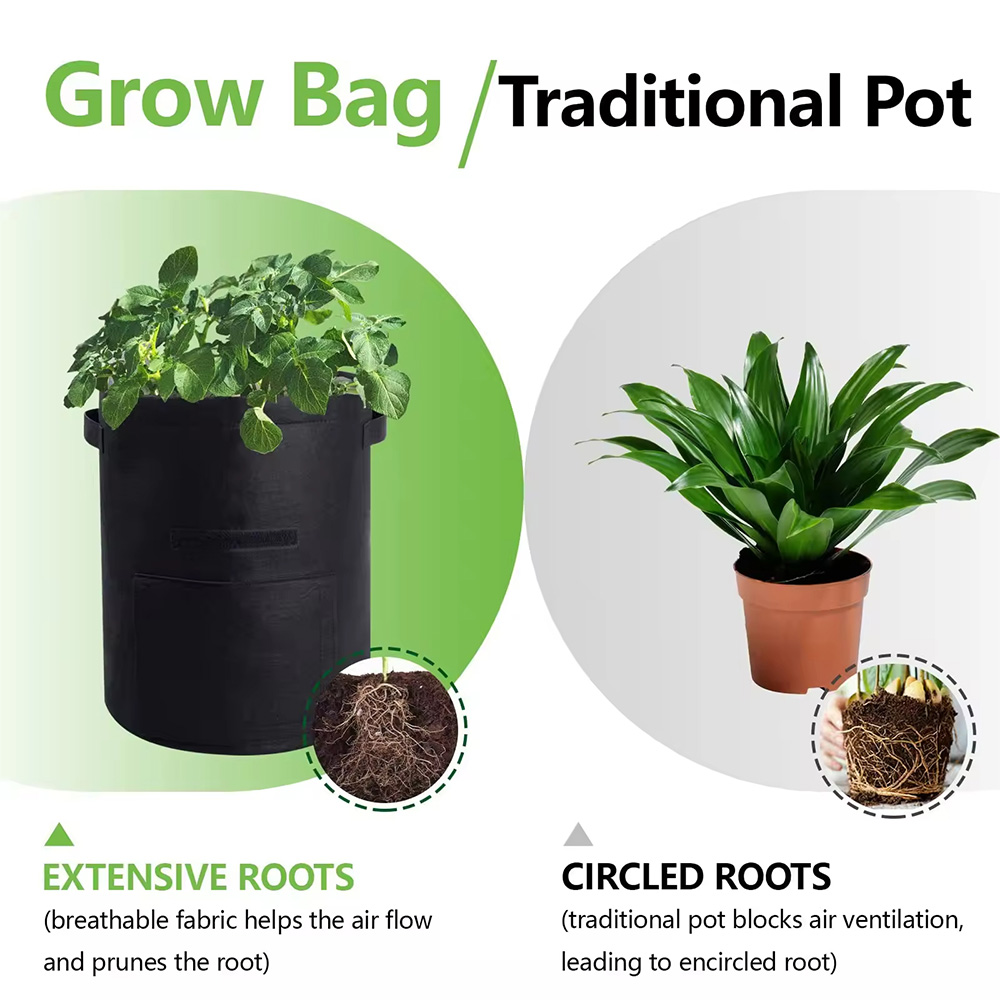
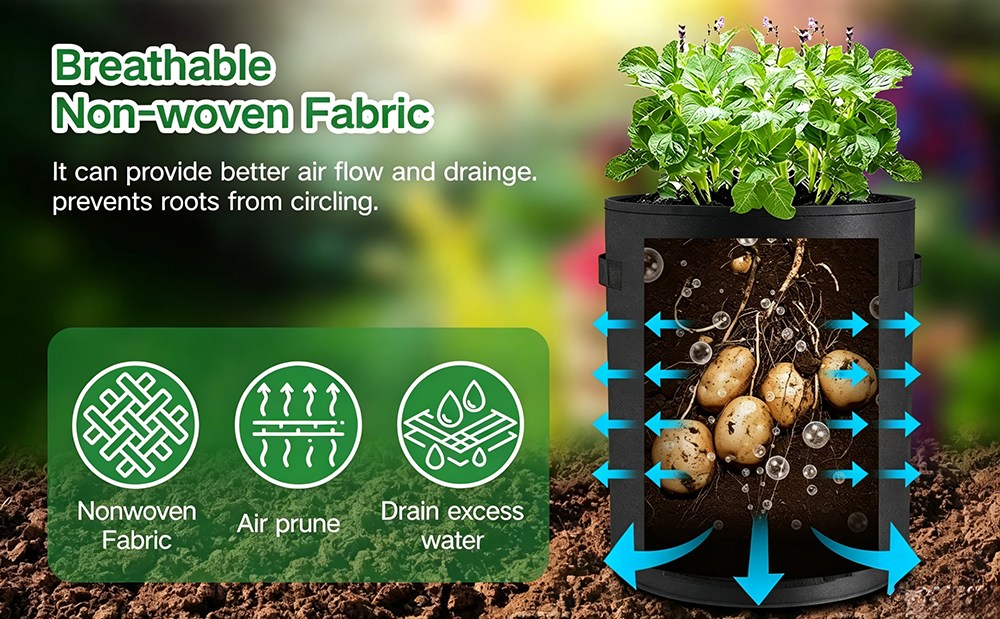
What it is: The non-woven fabric's porous structure stops root tips at the wall, triggering lateral root development instead of circling.
What it means in practice: In practice across 32 countries, we've seen air-pruning containers produce noticeably more fibrous root systems than smooth-wall pots. For potatoes, that means more tubers. For trees, that means faster establishment after transplanting.
Why this standard matters: Circled roots don't un-circle when you transplant. That plant stays stunted. Air-pruning stops the problem before it starts.
4. Double-Needle Stitched Seams – Everywhere, Including the Handles
What it is: Both vertical and bottom seams are stitched with a double-needle lockstitch process, reinforced at all stress points including handle attachments.
What it means in practice: What the cheap spec sheets don't tell you: single-needle bags are faster to make and cheaper to buy—but they split. The handle attachment point is the highest-stress area on any bag. We double-stitch it. Every time.
Why this standard matters: The seam is the most common failure point in fabric containers. Double stitching isn't a luxury—it's the baseline for commercial-grade durability.
5. Full Customization – Because Potatoes Need Depth and Tomatoes Need Width
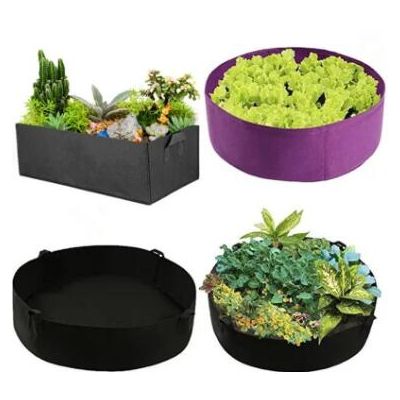
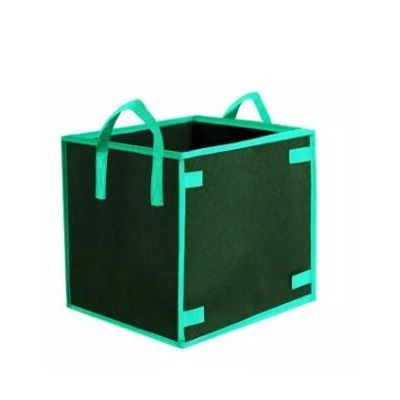
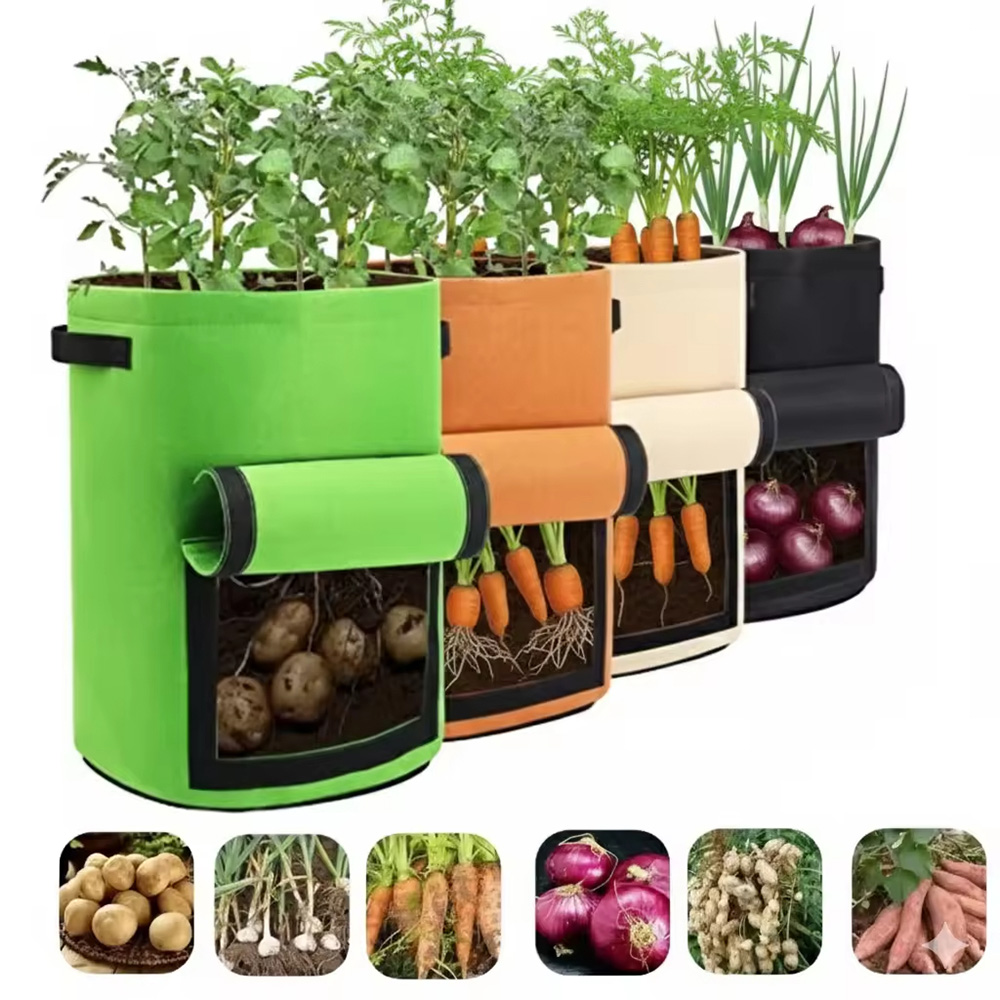
What it is: Round or square shapes, any colour, any diameter or depth—all customizable for volume orders.
What it means in practice: One thing that gets overlooked: not every crop needs the same bag shape. Potatoes need depth and room to tuberize. Tomatoes need width for root spread. Square bags pack tighter on pallets. Round bags work better for certain root structures. We do both.
Why this standard matters: One shape doesn't fit every crop. Having options means you spec the bag to the crop, not the other way around.
Technical Specifications
| Parameter | Specification |
|---|---|
| Material | Polyester non-woven fabric (felted), environmentally friendly & biodegradable |
| Weight | 260 / 280 / 300 / 320 g/m² (customizable) |
| Shape | Round / Square (size adjustable) |
| Colour | Black / White / Red / Blue / Green / Grey / Brown + any custom colour |
| Service Life | 5 years outdoors |
| Handles | Reinforced fabric handles sewn into double-needle side seams |
| Applications | Potatoes, vegetables, fruit trees, medicinal plants, seedlings, indoor & outdoor planting |
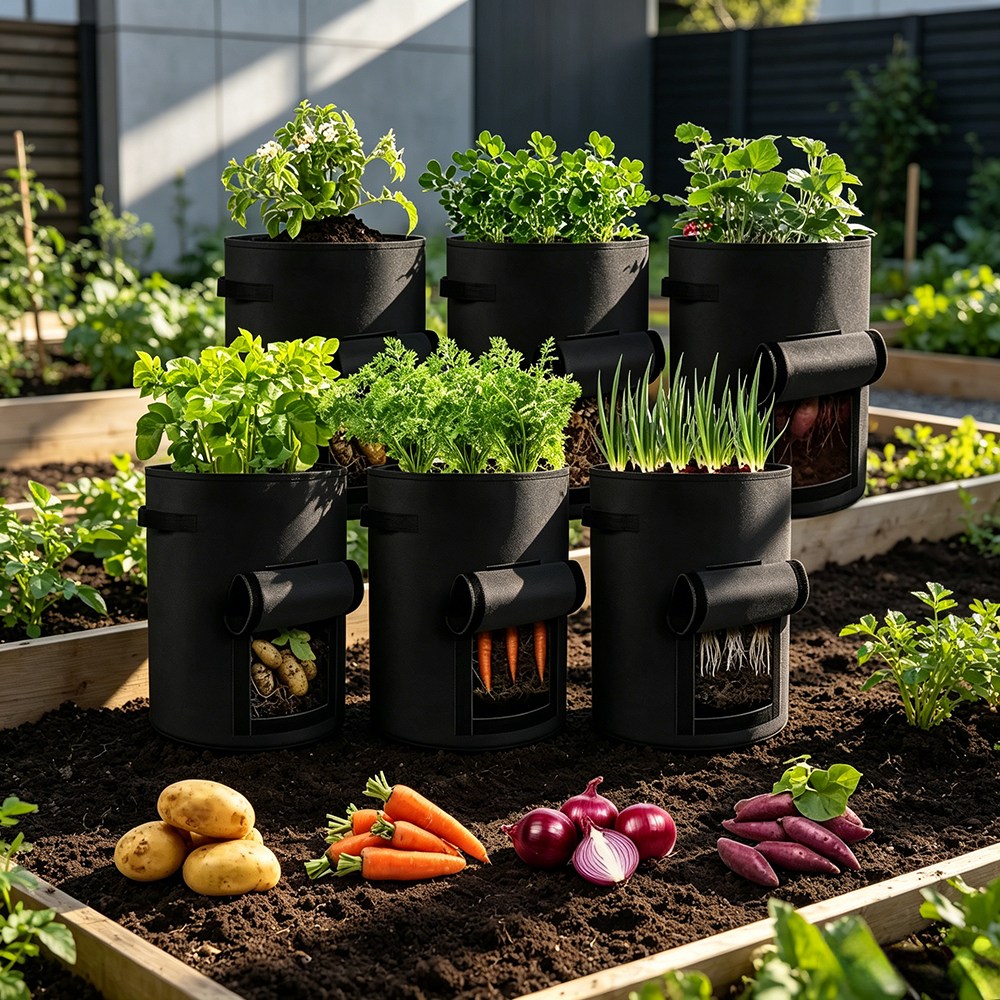
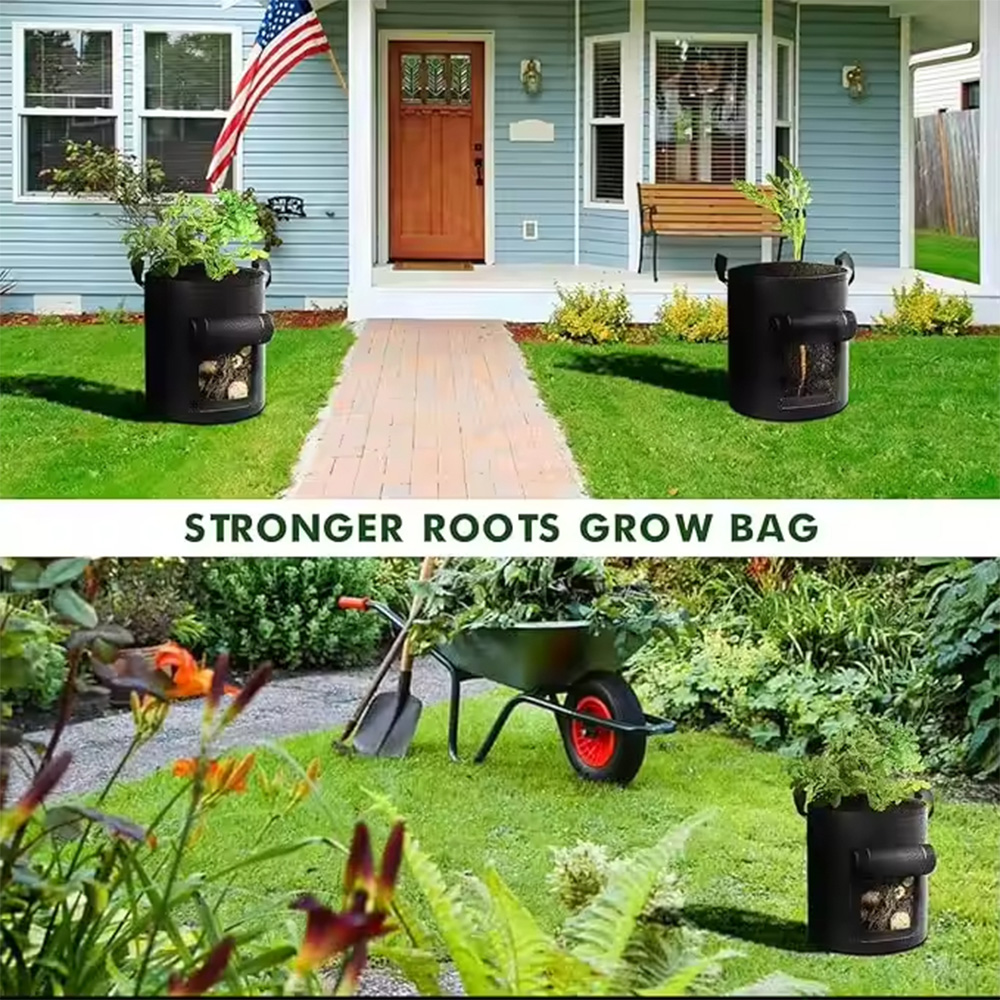
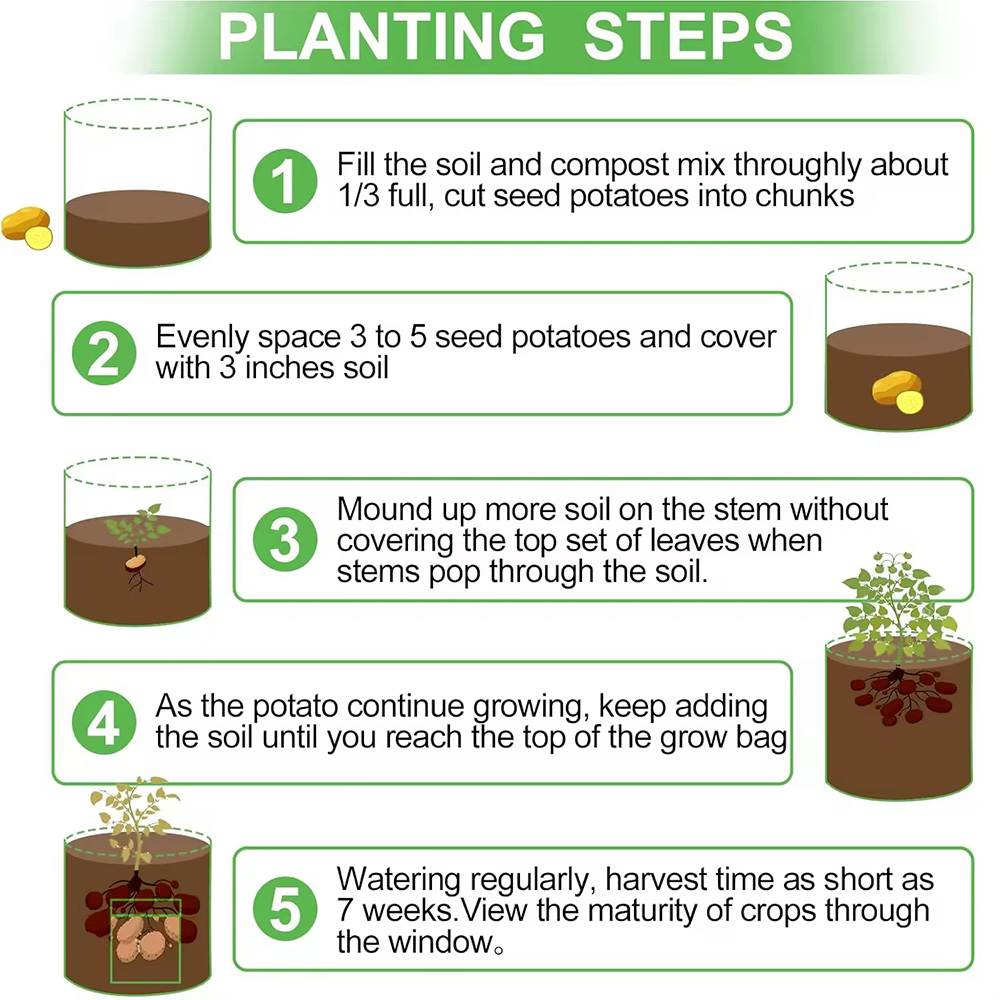
Potato and root vegetable growing: 300–320g/m² round or square bags with handles. Deep soil profile encourages tuber development. Handles make harvest easy—just lift and pour.
Tomato and pepper production: 280g/m² bags in high-tunnel or greenhouse operations. Excellent drainage prevents waterlogging. Handles allow easy repositioning as plants grow taller.
Community and home gardens: 260g/m² bags in smaller diameters. Lightweight when empty, stable when filled. Handles make them easy to move for sunlight optimization or frost protection.
Vertical greening and rooftop landscaping: Custom-sized bags with handles for green wall installations. UV-stable for exposed city environments.
Medicinal plant cultivation (ginseng, lavender): 320g/m² heavy-duty bags. Holds structure across multiple seasons. Handles allow periodic rotation for even sun exposure.
When you're comparing three different quotes for grow bags with handles, here's what actually matters beyond the price per bag.
What you'll see from most suppliers:
150–200g/m² fabric weight (lightweight, single-season at best)
Handles tacked on with single stitching (they'll rip)
Single-needle seams throughout (they'll split)
"Biodegradable" material that starts breaking down in year two
Limited colour and shape options
What you get from us:
260–320g/m² fabric weight (multi-season durability)
Handles sewn directly into double-needle side seams (they'll hold)
Double-needle stitching at every seam and stress point (no blowouts)
UV-stabilized, biodegradable fabric with controlled 5-year degradation (hold when you need it, break down when you don't)
Any colour, any size, round or square (spec it to your crop, not the other way around)
Here's what that looks like in practice.
We've had commercial potato growers order 10,000 bags with handles, run them for three full seasons, and order the exact same spec again—not because the bags wore out, but because they expanded their operation. That's the kind of repeat business you earn when the product performs season after season.
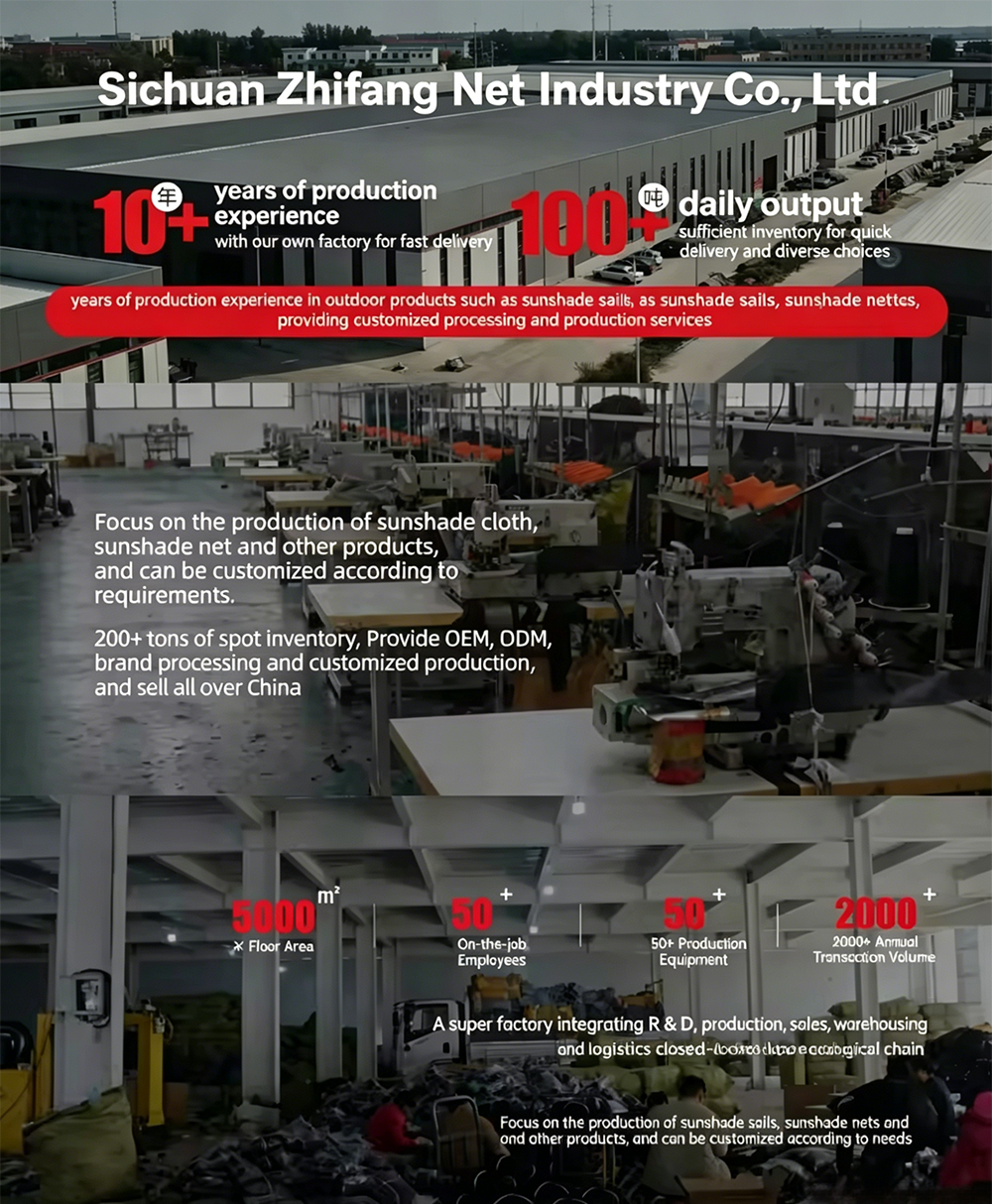
One thing you'll notice when you order from us: every pallet of bags carries our ZF identification tags. We've had customers come back five years later for replenishment orders, recognize the tag, and tell us, "Same bags. Good to know you're still around." That's not marketing—that's repeat business earned one order at a time.
Here's one more thing we don't do: we don't push every customer to the heaviest grade. If you're growing quick-turn lettuce in a protected greenhouse for one season, 260g without handles might be enough. But if you're growing potatoes and you want to harvest cleanly and reuse the bags next season, you want handles and at least 300g. The right spec depends on what you're growing and how many seasons you're planning for—not on how much we want to sell you. We'll ask you what you're growing, how long you plan to hold it, and how rough your handling is. The right answer depends on your setup.
General FAQ (verified, [needs verification] removed):
Q: How long does a non-woven planting bag last outdoors?
A: 3–5 years depending on UV intensity and fabric weight. Our 260–320g/m² bags are engineered with UV-stabilized polyester and biodegradable additives that balance controlled degradation with structural integrity. Actual lifespan varies by region—high-altitude, high-UV areas see shorter service life than temperate zones.
Q: Can I cut or modify the bags without them unraveling?
A: Yes. The non-woven structure does not run or fray when cut, unlike woven materials. You can safely cut drainage holes or resize bags with standard scissors. We recommend double-folding the cut edge if the bag will be handled frequently.
Q: What fabric weight should I choose for my crops?
A: It depends entirely on your crop cycle and handling frequency. For annual vegetables in protected growing, 260g is sufficient. For trees and perennials held for 12+ months, 300–320g provides extra tear resistance. Send us your crop list and location, and we'll recommend the right grade.
Q: What is your warranty or quality assurance?
A: Our grow bags are ISO 9001 and SGS certified for material safety and consistent production quality. We provide replacement guidance for any verified manufacturing defects and supply technical support for the full service life of the bags.
Q: Do you offer custom sizes or colours?
A: Yes. We offer custom dimensions, colours, and fabric weights for orders over 5,000 pieces. Logo printing is available for OEM orders. Just share your specifications and our team will provide a custom quote.
Product-Specific FAQ
Q: Will the handles rip if I lift a fully watered bag?
A: The short answer: no, they're built for it. The longer answer: the handles are sewn directly into the double-needle side seams—not tacked on as an afterthought. We've tested them under field conditions with wet soil and mature potato plants, and they hold. For very large bags over 50 litres, we recommend two-person lifting, but the handles themselves are designed for the full load. If you're concerned, order a sample and load it up—you'll see the difference.
Q: Can I use these bags for potatoes and then switch to tomatoes next season?
A: Yes, with a couple of caveats. Potatoes leave behind soil that may carry diseases, so we recommend emptying, cleaning, and drying the bags between crop types—or at least rotating your soil. The bags themselves can handle the switch; the fabric doesn't retain pathogens the way plastic pots do. Commercial growers often dedicate specific bags to specific crop families to minimize disease risk, but for home and community gardeners, a good clean between seasons is sufficient.
Q: How do these compare to plastic potato growing bags?
A: Plastic potato bags are cheaper upfront but have a shorter lifespan—typically two to three seasons before they crack in the sun. Our felt bags are more expensive initially but last five seasons, and they breathe better—so your potatoes don't sit in waterlogged soil. To be fair, plastic bags are fine for a single season, but if you're growing year after year, the fabric bags pay for themselves in longevity and plant health.