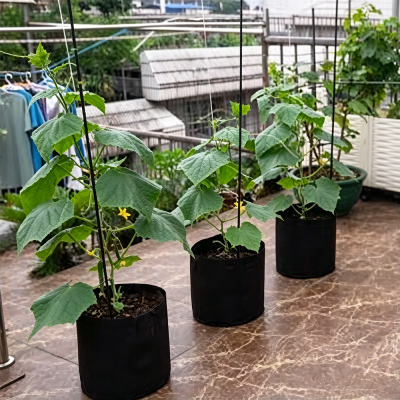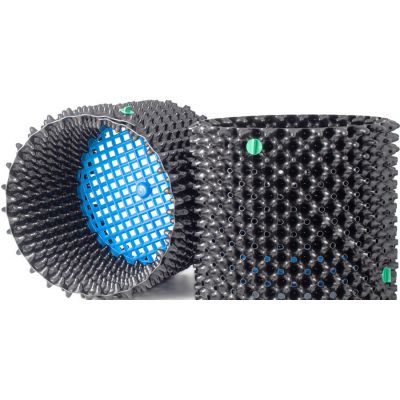


For a grape vine nursery the clock runs from cutting to productive vineyard, and the root system built in the pot is what sets the pace. This container shortens that path: root tips meet the slotted wall, air prune, and the vine answers with a mass of fine feeder roots that take off as soon as the planting happens. The split panel opens without root damage and reassembles for the next batch, while the PE body carries UV inhibitors and an anti ageing formula for the temperature swings of wine country. Custom dimensions and thicknesses match different rootstock and training systems.
Grape vine nurseries work on a simple clock: every week saved between cutting and productive vineyard is a week earlier to market for the grower down the line. The root system decides most of that timing, and this container is built around it.
A vine that leaves the nursery with fine feeder roots already massed through its plug takes off at planting instead of spending a season recovering. The mechanism is the familiar air pruning one: root tips reach the slotted wall, dry off, and the plant responds by branching fine roots through the growing medium rather than coiling the old wall. Vines established on that root mass reach training and fruiting earlier, which is the whole case for a fast root container in a vineyard programme. The full air pruning pot range covers every format up the ladder.


Vine programmes are rarely uniform: rootstocks differ, spacing plans differ, and the training system a vineyard will use is decided long before the vines ship. Custom dimensions and thicknesses are accepted against those plans, so a nursery can match each batch to the sequence it is grown for instead of forcing every vine through one pot size. Diameters and heights run 20 to 70 cm, with bases from 20 to 60 cm on the same panel system.


| Use | Grape vine nurseries, vineyards, rootstock programmes |
| Material | PE/PVC |
| Diameter | 20-70 cm, or customised |
| Height | 20-70 cm, or customised |
| Thickness | 0.6-1.2 mm, or customised |
| Base diameter | 20-60 cm |
| Colour | Black, or customised |
| Customisation | Accepted |
| Samples | Available |

Wine regions test a container twice: summer heat and winter cold on the pot itself, and season after season of handling at the nursery. The PE body carries UV inhibitors and an anti ageing formula for exactly that cycle, and the split panel design means the vine lifts out cleanly at planting while the pot reassembles for the next batch. Where a nursery raises vines from cuttings first, a seedling propagation tray covers the rooting stage before the move into these containers.

Vine stock moves under a name, and the container can carry it: panel printing with a nursery brand and tailored packaging are part of the customisation, so a wholesale vine operation presents its own identity from the nursery row to the vineyard delivery. Orders ship by size and volume with panels nested flat for freight. For soft-wall containers in the same programme, the planting bag alternative covers flexible growing. Trade coverage of growing practice runs at HortiDaily and FreshPlaza.
How does the pot speed up vine establishment?
Roots branch into fine feeder roots in the nursery instead of coiling, so the vine starts growing at planting rather than recovering from transplant shock.
Can sizes match different rootstocks?
Yes. Custom dimensions and thicknesses are accepted across the 20 to 70 cm ladder, so batches can follow different rootstock and training plans.
Can the container carry our brand?
Panel printing and tailored packaging are available with custom orders, alongside the standard black finish or customised colour options.

Tell us the rootstocks, sizes and volumes your vine programme runs and we will come back with the packing plan and lead time.
Mark Wu, Co-founder & Technical Director, Sichuan Zhifang Net Industry. 15 years manufacturing agricultural nettings for growers in 32 countries.