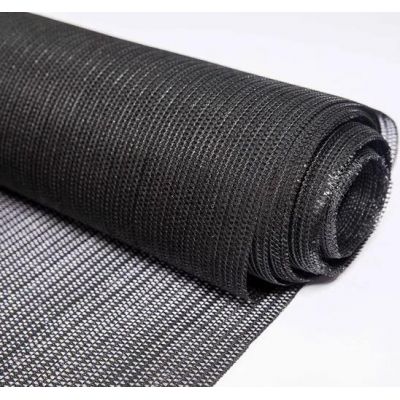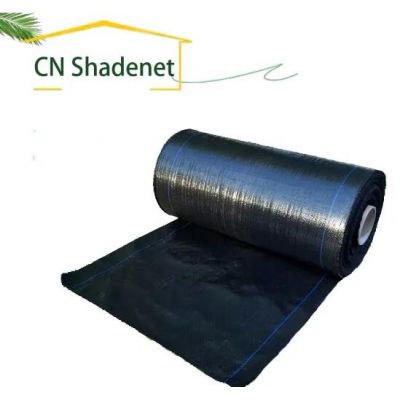


A buyer who has been running monofilament net often asks whether this one is the same material with a different finish. It is not. Tape filament net is knitted from flat film that has been slit into narrow strips and drawn, so each strand is a ribbon rather than a round thread. The ribbon covers more surface per strand, which is how a tape net reaches a given shading rate with fewer, wider openings. That is also why the two types weather differently over a season. The black here is a full black rather than a grey, so the net reads dark from both sides and the ground beneath stays evenly shaded.
A grower who has run knitted monofilament net for years sends the same specification and asks for it in this product. The shading figure matches. The net does not. Tape filament and monofilament reach the same number by different routes, and the two behave differently once they are out in the field.
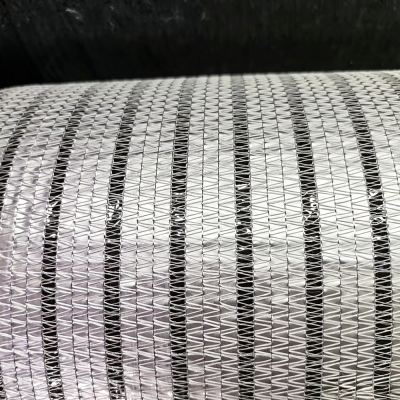
Tape filament starts as flat film that is slit into narrow strips and then drawn out. Each strand is a ribbon, so it presents more surface than a round thread of the same weight. That wider strand is what lets a tape net hit a given shading rate with fewer strands and larger openings, which affects how air moves through the fabric and how quickly rain drains off it.
Monofilament is extruded as round thread and knitted into a finer, flatter mesh. Neither is better in the abstract. A tape net generally costs less per square metre at a given rate, and it is more tolerant of the rough handling that goes with field cover. A monofilament mesh that needs to shed rain and stay flat over a long span is the other tool. Knowing which you are ordering stops the wrong one arriving.
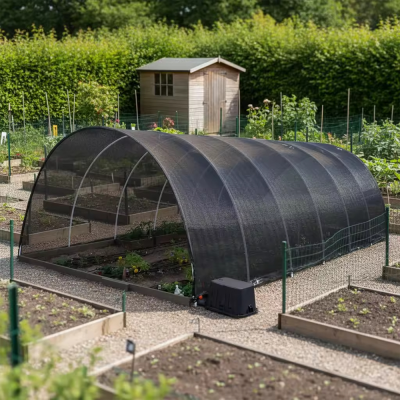
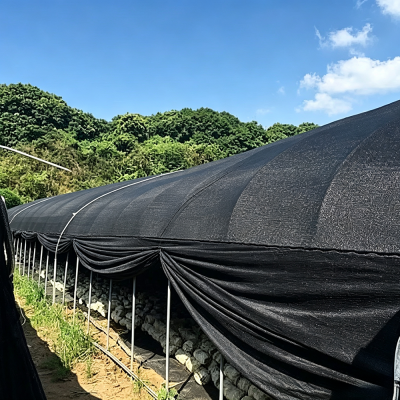
On an orchard or a field cover, the net has to hold a full black rather than a shade that fades in the first season. Colour on this fabric comes from the pigment worked into the film before it is slit, not from a surface dye, so the strand is black through its section rather than coated on the outside.
The practical effect is that the ground under the net stays evenly shaded across the whole bay instead of showing lighter patches where the coating has worn. A dark net also runs warmer underneath than a light one at the same rate, which suits cover that is protecting fruit from scorch rather than trying to cool a building. Send the crop and the site and we will say which colour we would ship.
| Material | HDPE tape filament, UV stabilised |
| Construction | Warp knitted flat tape mesh |
| Shading rate | 50% to 99%, made to order |
| Colour | Black, blue, green, white, other colours to order |
| Size | Customised to your row or bay |
| Applications | Orchard, agricultural field, greenhouse, nursery |
| Model | ZF-SH-003 |
| Packing | PE bag or woven bale, customised on request |
Work from the crop and the season rather than from the percentage on its own. Young trees and nursery stock usually take a higher rate; a fruiting orchard that needs light to size and colour loses yield if the cover is darkened too far. Roll width follows the row, because a cover that has to be joined across the middle costs more to fix and lasts less well than one cut to width.
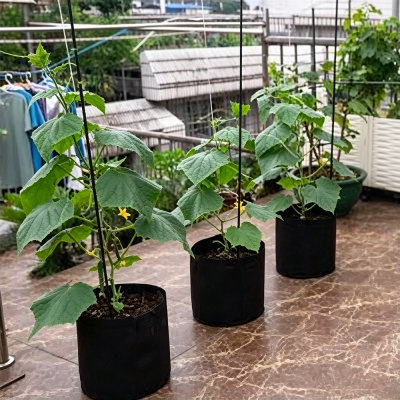
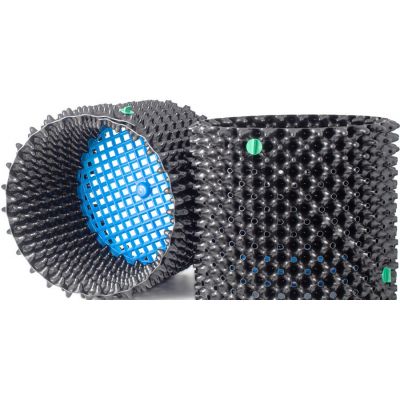
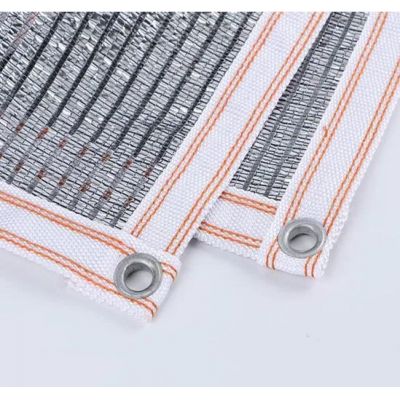
Wind is the second figure. A lighter net costs less per roll and also moves more in a gust, so on an exposed site the heavier construction often outlasts two lighter ones. Growers running container crops under this cover usually pair it with a planting bag, and the wider shade net range covers knitted and reflective types as well. The knitted version and the energy-saving screen are usually stocked alongside it for a full season.
UV stabiliser is where a low-cost net saves money, and a tape net is unforgiving about it in its own way: the strips are thin, so a weak stabiliser shows up as brittleness along the fold lines rather than as an obvious tear. Our nets go through the same five in-house checks as the rest of the range, ageing and tensile included, before a roll is packed.
We have been making agricultural netting since 2011, in a plant of close to 10,000 square metres with more than 50 machines. Field practice is covered in the trade press, including the reporting at Successful Farming field practice reference and the guidance published by the FAO protected cultivation guidance. Company background sits on our about page.
Is tape filament weaker than monofilament?
No, it is a different construction rather than a lesser one. Tape net uses wider flat strands and is more tolerant of rough handling in the field; monofilament gives a finer, flatter mesh that sheds rain.
Will the black fade to grey?
The pigment is worked into the film before it is slit, so the strand is black through its section. The net should stay black across its working life rather than showing lighter patches.
Which rate for an orchard?
It depends on the age of the trees and how much heat the site carries. Tell us the crop, the tree age and the site, and we will confirm the rate rather than leave you to guess.
Can it be cut to my row width?
Yes. Widths and lengths are cut to the row or bay you send, and there is no need to plan the site around a stock roll.
Send the crop, the row width and your site conditions, and we will confirm the shading rate, the colour and the weight that suit the job.
Mark Wu, Co-founder & Technical Director, Sichuan Zhifang Net Industry. 15 years manufacturing agricultural nettings for growers in 32 countries.
Running this net on your rows? Leave a review below and tell other growers which rate and colour you settled on.