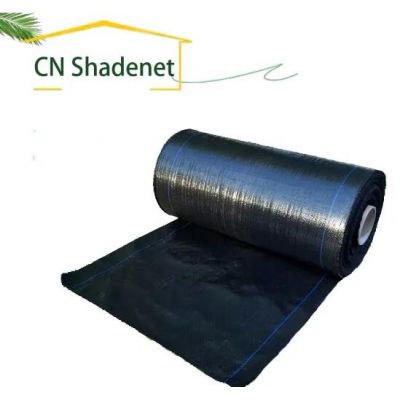


Most ground is not flat. Beds crown in the middle, rows run over a slope, and the ground under a cover is rarely the plane a drawing assumes. That is where a mulch film fails first: a solid sheet has no give, so where it crosses a crown or a furrow it is either stretched until it splits or left with a gap underneath that the wind gets into. A plain woven HDPE behaves differently, because the weave can move slightly with the ground rather than having to stay rigid. The cover follows the shape of the bed, keeps its coverage across a season, and still blocks the light while letting water and air down to the roots.
A cover is usually specified on the flat: a width, a length, an area. The ground it goes on is nothing like that. Beds are crowned so they drain, rows run over a slope, and the cover has to make the transition at every change of level without opening up. That is the point where a mulch film normally fails and a woven cloth does not.
A solid film has no movement in it. Laid across a crowned bed it is either stretched tight over the top and left bridging a gap at the shoulder, or it is pressed into the furrow and pulled at the ridge until it splits. Either way the cover stops being continuous, and the gap is where the weeds come up. A plain weave has a small amount of give in both directions, so the cloth follows the profile of the bed and sits down onto it instead of bridging it. That is also why the cover survives a season on ground that is being cultivated around it: it is not being held rigid against a surface that moves.
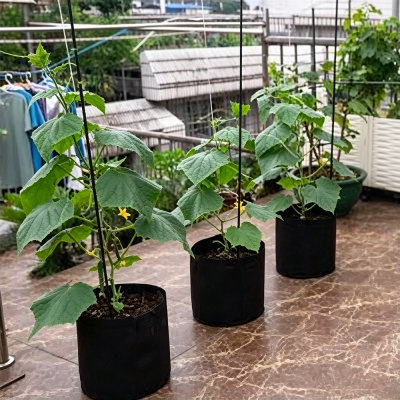
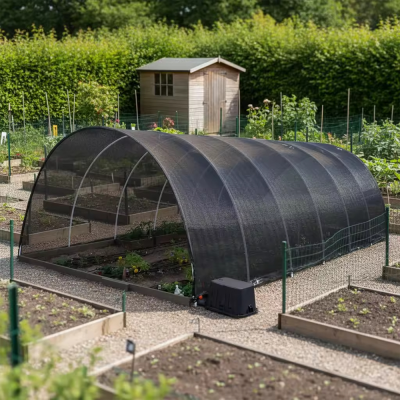
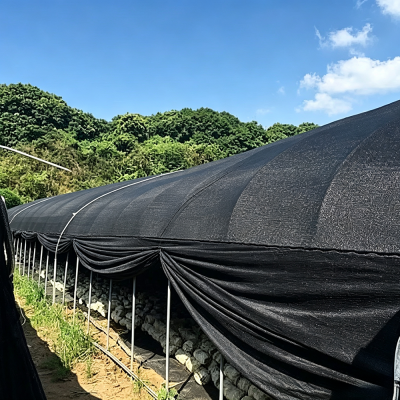
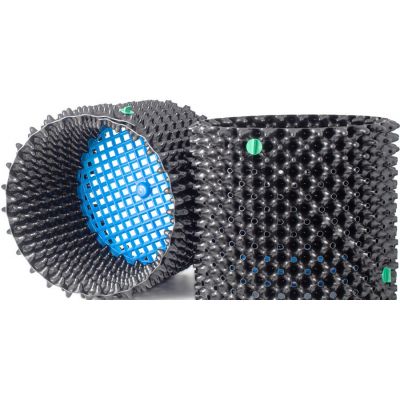
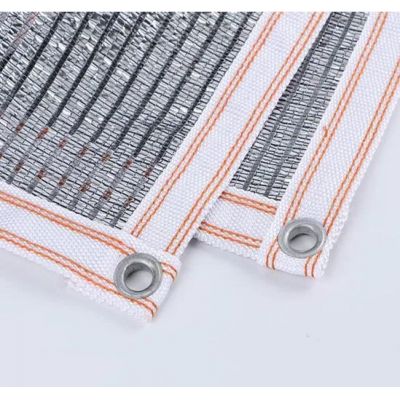
The cloth is used over market garden beds, along orchard rows where the ground rises and falls, and on landscape beds where the surface has been shaped rather than levelled. Crops go in through slits cut once the fabric is down. Because the weave passes water and air, the soil under a crowned bed still drains and roots still breathe. On bare ground around sheds and storage areas the flame retardant specification is available. Growers standing containers on the same ground often order a planting bag alongside it, and the shade net range covers the covers that go over the crop rather than into the ground.
| Model | WB-038 |
| Material | HDPE woven, plain weave, UV resistant |
| Width | Made to order to suit the bed |
| Length | Cut to your requirement |
| Colour | Black |
| Water and air | Permeable, water and air reach the root zone |
| Options | Flame retardant specification available on request |
| MOQ | 5000 m2 |
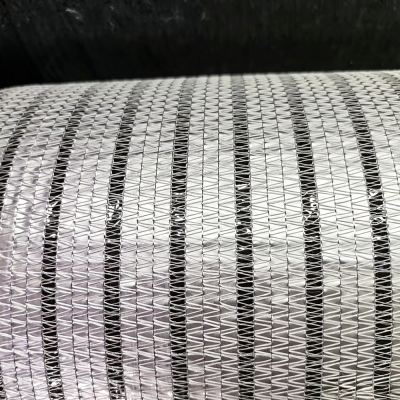
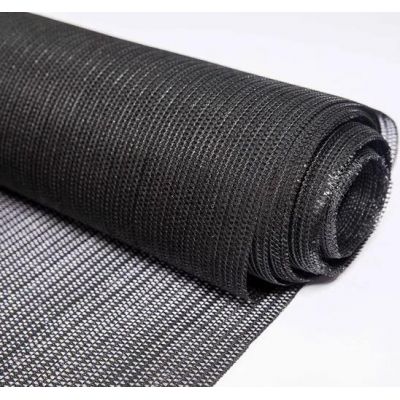
The construction is what makes the difference, and it is a balance rather than a property. Too rigid and the cover fights the shape of the ground and splits at the ridge; too light and it does not survive being walked on or dragged over. A plain weave sits in the middle: the yarns cross closely enough to resist abrasion and punctures, and the structure as a whole has enough movement to follow a contour without being stretched past its limit. On a site where the beds are shaped rather than flat, that combination is worth more than an extra few grams of weight. Where the requirement is covering plants above ground rather than the soil below, a knitted monofilament net is the better fit.
Width, length, colour and the flame retardant option are made to order, and the standard minimum order quantity is 5000 m2. OEM marking can be added where the goods are being sold on. Send us the bed profile as well as the plan, because on shaped ground the width of the cover and the way it is laid both follow from how the bed crowns and drains. Buyers tracking what is going onto market gardens and landscape beds can follow trade coverage such as HortiDaily and FreshPlaza for what growers are laying.
Will the cover split where the bed crowns?
A plain weave has some give in it, so the cloth follows the profile rather than bridging it. Tell us how the beds are shaped and we will confirm the grade and the width.
Does the fabric stop water reaching a raised bed?
No. The weave is permeable, so water drains through to the soil even where the bed is crowned. That is the difference between this and a solid film.
How is the cover held on shaped ground?
The edges are pinned or battened as on flat ground, but the important thing is that the cloth sits down onto the bed rather than being stretched across it. Tell us the profile and we will advise on the drop widths.
Tell us the bed plan and profile, the area to be covered and what the ground is used for, and we will confirm the widths, the cut lengths and the packing that suit your order.
Mark Wu, Co-founder & Technical Director, Sichuan Zhifang Net Industry. 15 years manufacturing agricultural nettings for growers in 32 countries.