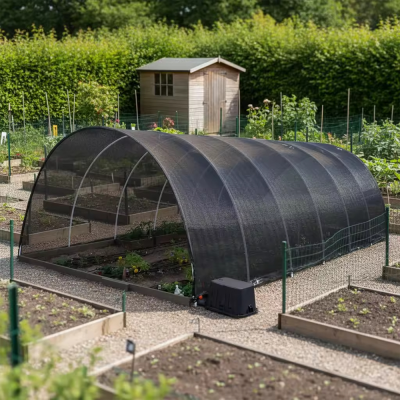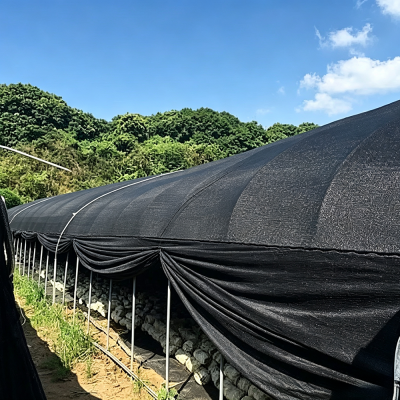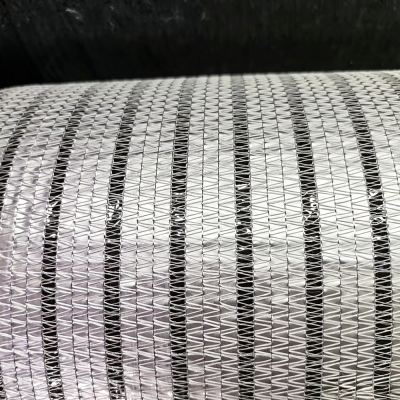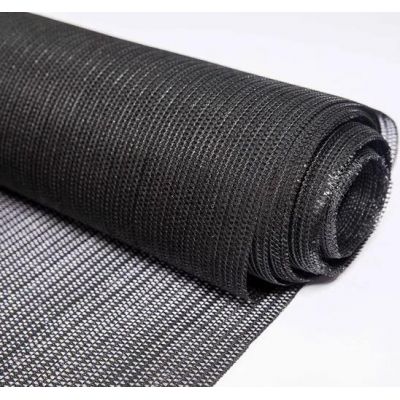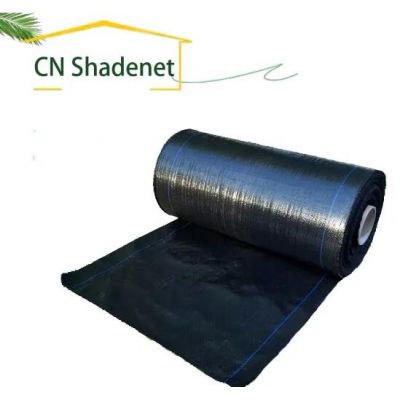


This is the anti insect net we supply for open-ground vegetable growing rather than for a building, and that changes what matters. Instead of cladding a structure, the net is pulled over low tunnels, laid across a raised bed or run as a row cover, so it has to take handling every season: hooped on, taken off for weeding, and put back. The cloth is a high strength weave in white and green, made to hold up to that handling while still letting air and light through, in widths from 2 to 6 m.
Netting used over open-ground vegetables is handled far more than netting used on a building. It goes over the hoops, comes off for weeding and hoeing, and goes back on, several times a season. That is why this cloth is specified for strength rather than for a shade rate.
On a structure the net is fixed once and left, so the specification is about light, airflow and how it fails in wind. Over a bed it is different: the cloth is dragged over hoops, folded back, and stretched across a frame by hand, and a light knit that survives on a greenhouse can snag and split within a season under that treatment. This is the higher strength weave, made in white and green, so the same piece can be taken off and put back through the growing cycle instead of being replaced each time. The open weave still lets air through, so a covered bed does not cook in the sun.
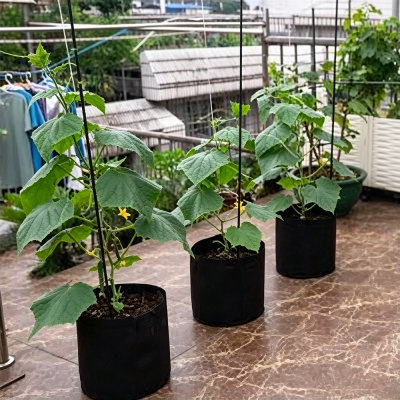
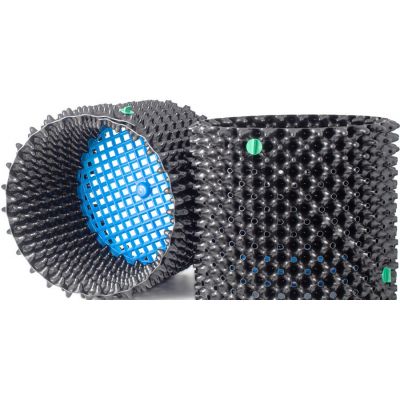
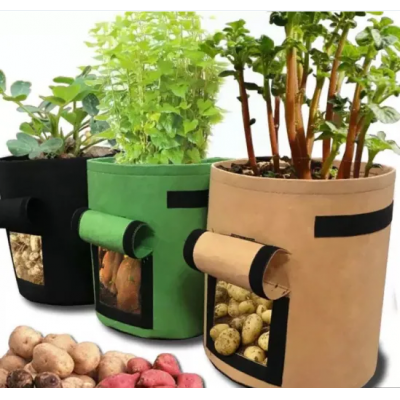
The netting is pulled over low tunnels, laid across raised beds, run as a row cover and hooped over salad and brassica crops, and it comes in 2 to 6 m widths so a bed can be covered in one piece rather than joined down the middle. Growers setting trays under the same netting often pair it with a planting bag, and the wider shade net range covers the shading grades where light rather than insect control is the problem.
| Material | High strength woven HDPE |
| Mesh | Made to order across the 20 to 60 mesh range |
| Width | 2 to 6 m |
| Colour | White and green |
| Function | Keeps insects off open-ground vegetable crops |
| Application | Low tunnel, raised bed and row cover |
| Packing | Roll, customised on request |
| MOQ | 5000 m2 |
Strength is the reason this grade exists separately from the standard insect netting: over a bed the net takes abrasion from the hoops and repeated stretching, and a weave that pulls out of shape leaves gaps where the covering is supposed to be doing its job. White and green are the usual colours for open-ground work, white because it keeps the light level up under the cover and green because it sits less visibly against a crop. A knitted monofilament net covers the shading job where a shade rate is wanted instead.
Width, length, mesh count and colour are made to order, and the standard minimum order quantity is 5000 m2. The first detail to confirm is the bed width and how the cover will be held down. Netting ships in rolls. Buyers tracking how cultivation netting performs can follow trade coverage such as HortiDaily and FreshPlaza for what is being installed.
Why a high strength weave rather than the standard insect net?
Over a bed the net is hooped, removed and re-laid several times a season, so it takes abrasion and repeated stretching that netting on a building never sees.
Can one piece cover a whole bed?
Widths run from 2 to 6 m, so most beds and low tunnels can be covered in one piece rather than joined down the middle.
Will it be too hot under the cover?
The weave is open, so air still moves through the fabric and a covered bed does not cook in the sun.
Tell us the bed width and how the cover will be held down, and the mesh count you have in mind, and we will confirm the roll and the packing that suit your order.
Mark Wu, Co-founder & Technical Director, Sichuan Zhifang Net Industry. 15 years manufacturing agricultural nettings for growers in 32 countries.